
ترابرنت رانندگان | اعلام بار
TaraabarNetAuto & Vehicles
4.372.00 Reviews
- Version
- 5.12.4-gp
- Installs
- 500.00K
- Age Rating
- Everyone
Screenshots
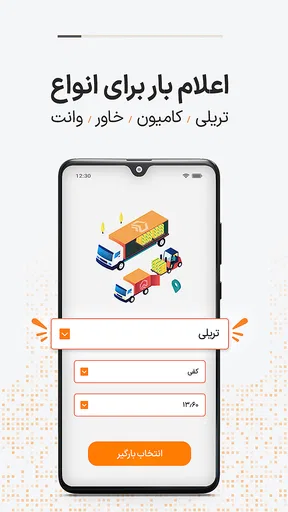
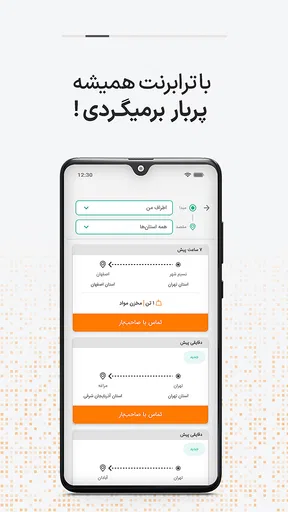
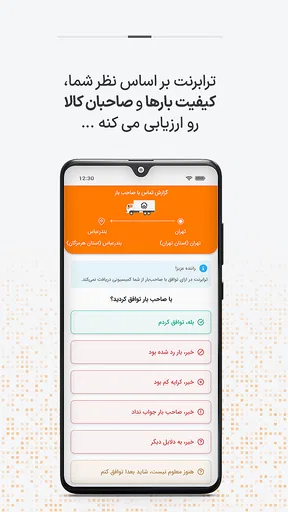
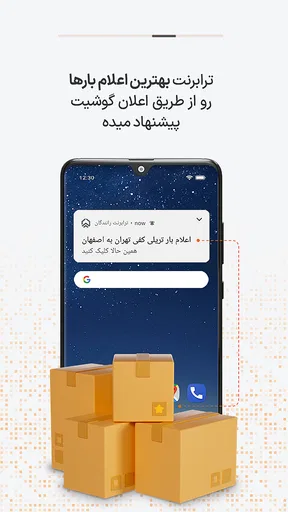
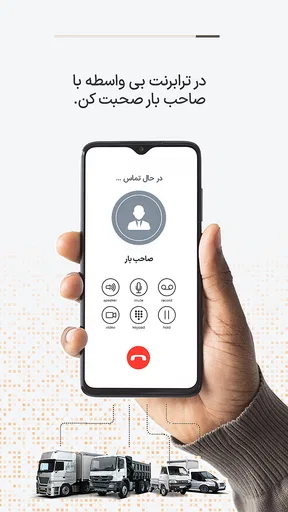
Our Review of ترابرنت رانندگان | اعلام بار
 Analysis by Appyee
I approached ترابرنت رانندگان as a practical tool for drivers who want to find road-freight work in Iran without depending entirely on informal calls, personal contacts, or scattered messages. The app sits in the Auto & Vehicles category, and its purpose is focused: connect drivers with available freight opportunities through an online marketplace. That narrow focus is important. This is not an all-purpose navigation app, a vehicle maintenance tool, or a general delivery service. It is built around the working side of road transport.
In my experience, that makes the app most interesting for independent drivers and small transport operators who regularly need to search for loads. It can also be useful for someone who is beginning to organize their work more digitally, especially if the usual method is checking several sources before deciding which trip is worth taking. The developer is TaraabarNet, and the application is free, with an Everyone content rating. Its store presence shows a 4.3 average from around 3.7 thousand ratings, along with more than 500 thousand installs, so it has clearly reached a substantial number of users.
How fast it feels when you need to find work
The first thing I would judge in an app like this is not visual polish but how quickly it helps me move from opening the app to understanding my options. A freight marketplace is useful only when the information is easy to reach at the moment a driver needs it. If I am parked and planning the next leg of a journey, I want to spend my attention comparing relevant loads, not wandering through unrelated menus.
Speed matters most during short decision windows. A driver may have limited time after unloading, may already be near a transport hub, or may need to decide whether returning empty is sensible. In those situations, an online marketplace can be more efficient than waiting for a contact to call with an opportunity. The benefit is not simply that the app is on a phone; it is that the search process can be brought into one working place.
I would still keep expectations realistic. The application cannot make a suitable load appear if there is no matching freight available for a particular route, vehicle, or timing. That is a marketplace limitation rather than a simple speed problem. A quick interface is helpful, but the real value depends on the quality and freshness of the listings a driver sees. This is why I would use it as an active checking tool, not as a promise that every opening of the app will produce a perfect trip.
For a driver, a good routine would be to check the marketplace before finishing the current job, then review it again once the destination and available time are clearer. That approach is more useful than opening it randomly and expecting a single search to settle the whole day. It also reduces the risk of choosing a load before confirming whether the route fits the vehicle and the driver’s schedule.
The app’s free price lowers the barrier to trying that routine. A driver does not have to commit money simply to see whether the marketplace fits their way of working. That is particularly helpful for occasional users or people comparing digital freight tools with their existing network of dispatchers and contacts. The trade-off is that a free app still requires the user to invest time in checking, comparing, and confirming information.
What the marketplace changes compared with traditional methods
The usual alternative is a mixture of phone calls, local knowledge, personal relationships, and messages exchanged through several channels. Those methods can be very effective when a driver has a strong network. They also offer context that a listing may not: a trusted contact may explain the shipper’s habits, the practical condition of a route, or whether a particular job is usually worth accepting.
Trabrent’s advantage is organization and reach. Instead of relying only on whoever happens to call, a driver can look for freight through a dedicated road-transport marketplace. That can be especially valuable when entering a new area or when the familiar contacts are quiet. It gives the driver another channel rather than forcing a complete replacement of established relationships.
I would not treat it as a reason to abandon every offline connection. In freight work, trust and clear communication still matter. The strongest approach is to use the app for discovery and comparison, then apply personal judgement before accepting anything. That combination is more realistic than expecting a marketplace to remove every uncertainty from a transport job.
What happens during heavy-use moments
The most demanding moments are likely to come when the driver is doing several things at once: checking available work, comparing destinations, communicating with a contact, and keeping track of fuel, timing, and the current vehicle position. Even if the app itself is not technically demanding, this is a high-pressure use case. A screen that feels manageable when sitting at home can feel much less convenient beside a loaded vehicle or during a tight turnaround.
I found the best way to approach this kind of tool is to prepare before the urgent moment. When parked safely, I would review the available options, note the routes that look relevant, and decide what information needs confirmation. That turns the app into a planning aid rather than something I have to explore from scratch while under pressure. It is a small workflow change, but it can make the difference between a useful search and a rushed decision.
Another practical point is to avoid judging a load from its destination alone. A route that looks attractive may not suit the vehicle, the driver’s next planned location, or the time available. The app can help surface opportunities, but the final decision still belongs to the person who understands the vehicle and the real operating conditions. I would compare the proposed trip with the current job, expected return direction, and the amount of empty travel involved.
For someone who drives regularly, the app is most useful when it becomes part of a repeatable check rather than an occasional emergency measure. A simple sequence works well: check the marketplace while parked, shortlist plausible options, confirm the details through the appropriate channel, and only then commit. This reduces unnecessary screen time and helps separate browsing from accepting.
Heavy use can also expose a human limitation that no app can solve: too many choices can slow a decision. If several loads appear relevant, I would narrow them by route first, then by practical fit, instead of trying to compare everything at once. The marketplace is valuable because it widens the search, but wider choice requires stronger filtering from the driver.
Useful for different kinds of drivers
Independent truck drivers are the clearest audience. Someone who frequently searches for the next job can benefit from having a dedicated place to look rather than depending only on chance calls. Small operators managing more than one vehicle may also find the marketplace useful as a shared source of opportunities, although the actual workflow will depend on how they divide communication and decision-making.
It may be less useful for a driver who already has a fixed schedule and receives every assignment through a long-term employer. In that situation, the app could add another place to check without solving a real problem. It is also not the right choice for someone looking for passenger transport, personal navigation, or general car services. Its value is tied to road freight and the search for related work.
A new driver should also understand that finding a listing is not the same as understanding the full job. The app can support the search, but experience is still needed to judge whether a route, load, timing, and vehicle combination make sense. I would recommend treating it as a source of opportunities, not as a substitute for transport knowledge.
Reliability, stability, and how I would recover from problems
Reliability in a freight app has two layers. The first is technical: can I open and use the application when I need it? The second is operational: can I trust the information enough to make a sensible decision after checking it? A stable app is helpful, but stability alone does not guarantee that every listing will remain available or that every detail will match the situation by the time a driver responds.
That distinction shaped my view of Trabrent. Its established presence, broad install base, and user rating suggest that many people have found it useful enough to keep using. The current version is 5.12.4-gp, and the application supports Android 6.0 and later. Those details make it accessible to users who may not be carrying a recent flagship phone, which is relevant in professional driving where a dependable older device may be preferred over an expensive new one.
Still, I would build a recovery habit around any marketplace app. If the application does not load at an important moment, I would first make sure the phone has a usable connection and then retry from a safe parked position. If the issue continues, the sensible fallback is the driver’s existing network of calls or messages. Keeping those alternatives available is not a criticism of this particular app; it is good practice whenever income depends on timely communication.
I would also avoid making a final commitment from a first glance. If a listing is important, I would reopen the relevant information, check the route and practical fit, and confirm the details before setting off. This second look helps catch misunderstandings caused by hurried reading, changing availability, or assumptions made by the user. The app can shorten discovery, but careful confirmation remains part of reliable transport work.
For users with inconsistent connectivity, the app should be considered an online tool rather than a replacement for all offline preparation. I would check opportunities before entering areas where connectivity may be uncertain and keep essential contact details available in another form. That workflow protects the driver from being stranded by a temporary technical interruption.
Where trust needs personal verification
A marketplace brings together people who need freight moved and drivers looking for work. That creates useful choice, but it also means the driver should ask practical questions before accepting a job. I would want to clarify the pickup point, destination, timing, vehicle suitability, and the terms that matter for the trip. Even when a listing looks straightforward, those details can determine whether the opportunity is genuinely worthwhile.
This is one of the app’s important trade-offs. A direct personal contact may provide more background immediately, while an online marketplace can expose a wider range of possibilities. The app wins at discovery; a trusted conversation may win at context. Using both in sequence gives a more dependable result than relying blindly on either one.
I also appreciate that the Everyone rating makes the app broadly approachable, but that should not be confused with professional simplicity. The interface may be accessible to a wide audience, while the decisions made through it still involve commercial responsibility. A first-time user should take time to understand the workflow before depending on it for a time-sensitive trip.
Device constraints and everyday practicality
Because the minimum operating system is Android 6.0, the app is not limited to the newest phones. That is a practical advantage for drivers who keep a dedicated work handset or prefer a proven device with a familiar battery routine. In this category, dependable access can matter more than having the latest screen or processor.
At the same time, an older compatible phone can have its own limits. Storage pressure, an aging battery, a crowded notification area, or a weak mobile connection can make any online marketplace feel slower or less dependable. I would keep the working phone reasonably tidy, close unrelated apps before a serious search, and avoid relying on a nearly empty battery when checking for the next load.
Resource demands should also be judged in context. A freight marketplace is generally used in short sessions: open it, inspect opportunities, compare practical options, and move on. That is different from leaving a demanding entertainment app running for hours. The sensible habit is to use it while parked, then lock the phone and concentrate on driving. This protects attention as much as it protects battery life.
I would not use the app while the vehicle is moving. Even a quick glance can turn a useful tool into a safety problem. The best workflow is to prepare at a stop, save or note what needs follow-up, and handle communication only when the vehicle is safely parked. This is especially important because the app’s purpose can encourage frequent checking when a driver is eager to find the next job.
Another device-related trade-off is screen size. A larger phone may make route and listing details easier to review, while a smaller device is often easier to keep accessible in a work environment. I would prioritize clear reading and reliable battery life over appearance. If the information is difficult to inspect without zooming or repeated scrolling, the driver should slow down and review it only when stationary.
A realistic day-to-day example
Imagine finishing a delivery and knowing that the truck will soon be available. Instead of immediately driving toward the next area without a plan, I would park, open the marketplace, and look for freight that aligns with the vehicle’s direction and remaining time. I would shortlist the options that appear practical, then confirm the details before accepting. If nothing suitable appears, I would continue with the usual contacts rather than forcing a poor match.
That example shows where the app earns its place. It does not need to replace every existing method to be useful. It only needs to reveal a worthwhile possibility at a moment when the driver might otherwise return empty or spend a long time making separate calls. The benefit is greatest when the driver is flexible enough to consider different jobs but experienced enough to reject those that do not fit.
For a small fleet, the same process could support a daily planning conversation. One person can review potential freight while another considers which vehicle is available and whether the destination fits the schedule. The app becomes a shared starting point for planning, not the sole decision-maker. That distinction keeps expectations realistic and reduces the chance of accepting work without checking operational details.
My performance verdict for road-freight work
After looking at the app through the lens of speed, busy moments, reliability, and device practicality, I see Trabrent as a focused utility rather than a complete transport-management system. Its strongest quality is the way it gives drivers a digital place to search for road-freight opportunities in Iran. The free price and broad Android compatibility make it easy to test, while the established user base suggests it is not an obscure experiment.
I would recommend it to independent drivers who want another route to finding loads, especially those who sometimes finish a job without a clear next assignment. It is also worth trying for drivers who are tired of depending on one source of information and want to compare marketplace opportunities with their existing contacts. The app is most effective when used proactively, from a parked vehicle, with a clear idea of the routes and jobs that are actually acceptable.
I would be more cautious about recommending it to someone whose work is already fully assigned or to anyone expecting automatic dispatch, navigation, or a guarantee of suitable freight. Those users may gain little from adding another search step. Likewise, a driver who cannot verify details before committing should not rely on a listing alone. In freight transport, the final judgement still requires experience and direct confirmation.
The most important insight is that the app should be treated as a discovery and comparison tool, not a replacement for professional judgement. Its speed can reduce the effort of finding possibilities, but it cannot remove the need to check route suitability, timing, vehicle fit, and communication. Its reliability is strongest when paired with a fallback method, and its performance is easiest to manage when the phone is maintained and used only while parked.
For me, that balance makes it a sensible addition to a driver’s working phone. It will not solve every empty-return problem, and it cannot turn an unsuitable load into a good one. What it can do is put more freight opportunities in front of the right user at the right time. If that is the problem you are trying to solve, ترابرنت رانندگان is a practical free app to try, with enough reach and focus to earn a place alongside traditional transport contacts.
Verdict
Strengths of ترابرنت رانندگان | اعلام بار
- Real-time load listings help drivers find available freight quickly.
- Designed specifically for Iranian transport drivers and logistics needs.
- Driver-focused interface keeps essential transport tools easy to access.
- Can reduce empty trips by matching drivers with nearby cargo opportunities.
- Useful for comparing different freight offers before accepting a load.
Limitations of ترابرنت رانندگان | اعلام بار
- Requires reliable internet access for current load information.
- Load availability may vary significantly by city and time of day.
- Some listings may lack complete details about cargo or payment terms.
- Users may need to verify brokers and offers independently before accepting.
- The app may be less useful outside Iran or for international transport.
Similar Picks in This Category
View All
Android Auto
Google LLC4.1

maxim — order a taxi & food
PT. SITO4.7

Штрафы ГИБДД: проверка с фото
Pays LLC – Штрафы ГИБДД4.7

Номерограм – проверка авто
Авто Ассист4.8

Дром Авто
Дром4.9

Frequently Asked Questions
What is ترابرنت رانندگان | اعلام بار, and who is it designed for?
ترابرنت رانندگان | اعلام بار is a transportation and freight-matching application designed primarily for truck and commercial vehicle drivers in Iran. It helps drivers find available cargo loads, review shipment details, and potentially connect with shippers or transport companies. The app is most useful for professional drivers who want to reduce empty return trips and manage freight opportunities from a mobile device.
How can drivers find and accept a cargo load in the app?
After registering and completing the required driver or vehicle information, users can browse available freight announcements based on location, destination, vehicle type, and other shipment details. Each listing may include information such as the loading point, unloading destination, cargo type, and transportation requirements. Drivers should carefully review the conditions and contact the relevant party before accepting a load.
What information or documents are required to register?
Registration requirements can vary depending on the app’s current policies and the driver’s transportation status. In general, users may be asked to provide a mobile number, personal identification details, vehicle information, and professional transportation documents. Keeping license, vehicle, and driver details accurate is important because incomplete or incorrect information may limit access to freight listings or delay account verification.
Is ترابرنت رانندگان | اعلام بار available for all vehicle types and routes?
The application may support different commercial vehicles and transportation routes, but availability depends on the freight listings published in the system. Some loads may be limited to specific truck categories, capacities, equipment, or destinations. Before relying on a listing, drivers should confirm that their vehicle meets the stated requirements and that the route, cargo conditions, and delivery schedule are suitable for them.
Is the app safe to use, and should drivers verify freight details before traveling?
The app can make it easier to discover transportation opportunities, but users should still verify every important detail before committing to a shipment. Confirm the identity of the shipper or transport company, payment terms, cargo information, loading time, destination, and any required documents. Drivers should also review the app’s privacy permissions and avoid sharing sensitive personal or financial information with unverified contacts.
